Community
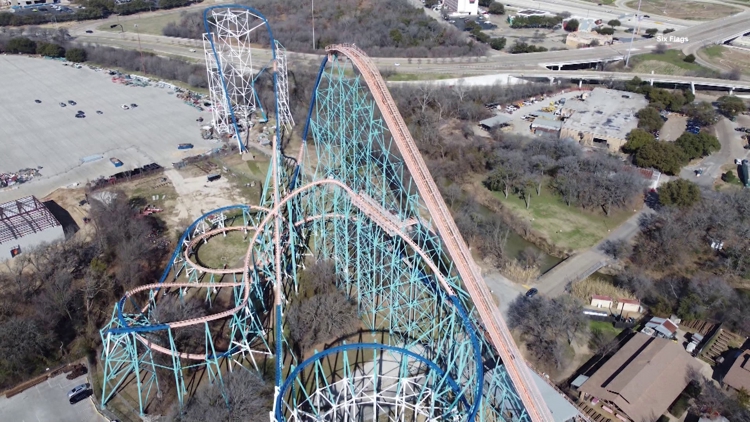
Guests pulled off Titan roller coaster at Six Flags over Texas after one person violated code of conduct, park says
By Daniela Ramirez
Advertisement · Why this ad?
Daniela Ramirez has over 15 years of journalism experience, formerly serving as the City Editor at the Galveston Daily News. She graduated from the University of Houston with a degree in Journalism. Daniela is passionate about local governance and grassroots movements, often highlighting community stories that inspire change.
More from Daniela →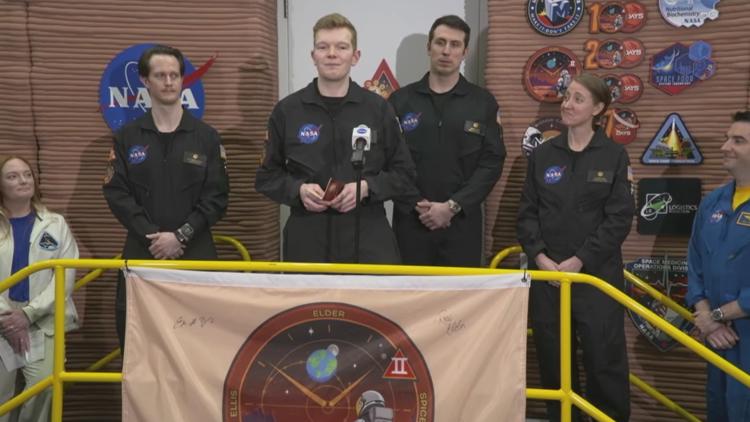
As the sun set over Houston, a palpable sense of anticipation filled the air. Four volunteers emerged from a 3D-printed habitat, their faces reflecting a mix of exhaustion and exhilaration. After a year of isolation, these brave individuals had just completed a unique mission that simulated life on Mars. Their journey was not only about space exploration but also about the resilience of the human spirit and the bonds formed under extraordinary circumstances.
In a groundbreaking experiment, four volunteers—Hannah, Mark, Sarah, and David—spent an entire year living in a habitat designed to mimic the conditions on Mars. This initiative, part of NASA's ongoing research into space colonization, aimed to study how isolation affects human psychology and teamwork. The 3D-printed structure, located outside Houston, was equipped with all the essentials for survival, including a hydroponic garden, sleeping quarters, and a communication system that simulated the delayed interactions one would experience on Mars.
Throughout the year, the volunteers faced numerous challenges, from managing limited resources to maintaining their mental health in isolation. They conducted experiments, documented their experiences, and participated in daily tasks that would be necessary for a real Mars mission. Their commitment to this project reflects not only a personal ambition but a collective effort to push the boundaries of what is possible in space exploration.
The community of League City has rallied behind these pioneers, celebrating their extraordinary commitment to science and exploration. Local schools integrated the volunteers' journey into their curriculum, using it as a teaching moment about teamwork, perseverance, and the importance of scientific inquiry. Parents and children alike were inspired by the volunteers' stories, sharing their thoughts on social media and at community events.
In a recent community gathering, Hannah shared her insights about the experience, stating, "We learned how to communicate effectively, even when under pressure. It’s a skill that goes beyond space missions; it’s about connecting with each other in our daily lives." Mark added, "Our time in isolation taught us the value of community. We need each other, whether on Earth or Mars." These sentiments resonated deeply with attendees, who expressed gratitude for the lessons learned through the volunteers' sacrifices.
Local leaders, including Mayor Pro Tem of League City, have voiced their support for the project, emphasizing the importance of scientific exploration in inspiring youth. The mayor remarked, "These volunteers are heroes in our community. Their dedication to advancing human knowledge is something we should all aspire to." The city plans to host a celebration event to honor the volunteers and share their story with an even wider audience, highlighting the role of community engagement in fostering scientific curiosity.
Understanding the psychological and physiological effects of long-term isolation is critical for future space missions. NASA's research aims to prepare astronauts for potential missions to Mars, which could last several years. The data collected from the volunteers will contribute to a broader understanding of how humans can adapt to life in confined spaces, cope with stress, and maintain mental health.
Dr. Emily Chen, a psychologist involved in the study, explained, "Isolation can have profound effects on mental health. By studying these volunteers, we hope to identify strategies to support astronauts in future missions." The research findings will not only aid space exploration but can also provide insights into improving mental health support systems on Earth, especially in our increasingly disconnected society.
The implications of this research extend beyond space exploration. The findings could inform various sectors, including healthcare, education, and corporate environments, where teamwork and mental resilience are essential. Understanding how to foster collaboration and maintain mental well-being in isolated or high-pressure environments can lead to better outcomes in fields ranging from emergency response to remote work.
For the volunteers, this mission was more than just a scientific endeavor; it was a transformative personal journey. Sarah reflected on her experience, saying, "I learned so much about myself and what I’m capable of. It’s amazing how much we can grow when we step outside our comfort zones." David, who plans to pursue a career in aerospace engineering, noted, "This experience solidified my desire to work in space exploration. I want to contribute to making life on other planets a reality."
The challenges they faced during the mission also brought them closer together. The volunteers became a tight-knit family, supporting one another through difficult moments. Their shared experiences have forged lifelong friendships that will extend beyond the confines of the habitat. As they reintegrate into society, they carry with them not just memories but lessons on unity, resilience, and the importance of community.
Looking ahead, the volunteers are eager to share their experiences with the community and inspire others to engage with science. They plan to visit local schools, participate in community events, and contribute to discussions about the future of space exploration. Their story serves as a reminder of the incredible potential within each of us to rise to challenges and pursue our dreams.
The volunteers are also considering launching a mentorship program aimed at high school students interested in STEM fields. By sharing their experiences and knowledge, they hope to encourage young minds to explore careers in science, technology, engineering, and mathematics. This initiative would not only provide guidance but also create a platform for students to ask questions and gain insights from those who have embarked on a unique journey.
Furthermore, the city of League City is exploring opportunities to support STEM education initiatives, ensuring that the next generation is equipped with the skills needed for future endeavors in science and technology. As the volunteers take their next steps, they will continue to advocate for the importance of education, community, and the pursuit of knowledge.
In conclusion, the journey of these four volunteers is a testament to the human spirit's capacity for resilience and connection. Their year of isolation has not only contributed to the future of space exploration but has also strengthened the fabric of our community. As we celebrate their achievements, let us remember the power of commitment—both in our personal lives and in our shared aspirations for the future.
By Daniela Ramirez

By Carlos Jimenez
By Carlos Jimenez
By Daniela Ramirez